DEM-informed feed review
Material trajectory, bed depth, and transfer points are checked before equipment sizing is finalized.
Continental supports mine operators, aggregate producers, and energy infrastructure teams with crushing and screening systems documented for feed variability, abrasion behavior, throughput targets, and maintainability windows.
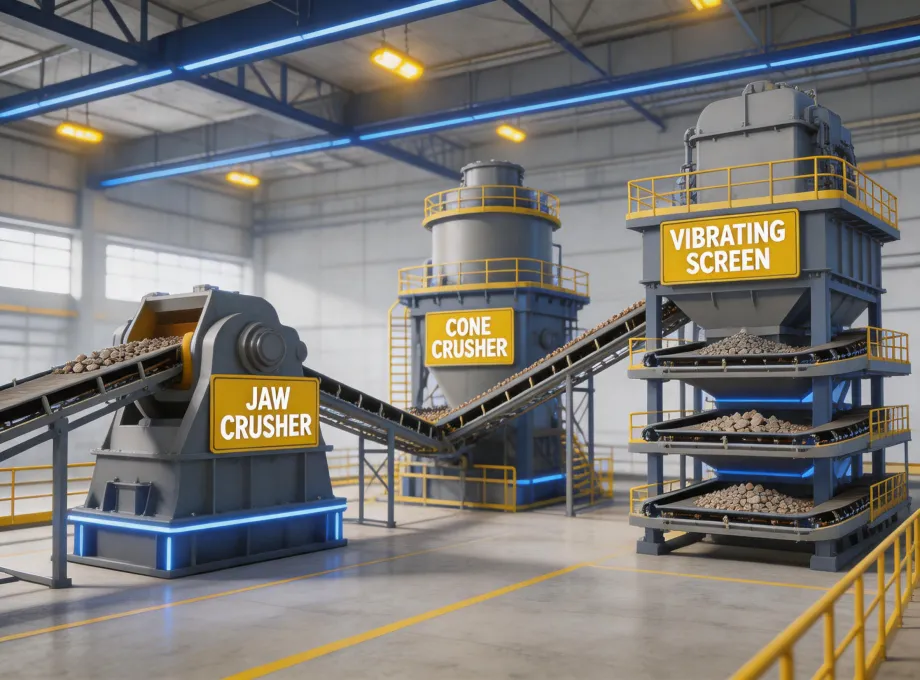
Each crushing and screening proposal is structured around measurable inputs rather than generic capacity claims, giving procurement, process, and maintenance teams a shared basis for technical comparison.
| Feed top size | Mapped to jaw opening, grizzly setting, and surge bin geometry. |
|---|---|
| Abrasivity index | Used to select liner metallurgy, wear profile, and inspection frequency. |
| Moisture behavior | Assessed against screen media aperture, blinding risk, and wash requirement. |
| Throughput model | Balanced against crusher power draw, screen area, recirculating load, and transfer capacity. |
|---|---|
| Product split | Documented by target gradation, oversize return, and fines control strategy. |
| Availability target | Reviewed through maintenance access, spare modules, and planned shutdown windows. |
| Data sheets | Model-specific operating envelope, recommended settings, and service clearances. |
|---|---|
| Installation notes | Foundation loads, lifting points, commissioning checks, and guarding interfaces. |
| Lifecycle records | Inspection intervals, liner change planning, critical spares, and reporting format. |
Material trajectory, bed depth, and transfer points are checked before equipment sizing is finalized.
Wear profiles are matched to ore abrasivity, inspection routines, and shutdown planning requirements.
Aperture, tensioning, deck angle, and moisture risk are documented for predictable classification.
Drive selection is reviewed against duty cycle, motor protection, and site electrical constraints.
Access zones, lifting routes, and consumable replacement sequences are considered before delivery.
Startup checks, acceptance observations, and operator handover notes are kept in a traceable file.
Crusher and screen overview sheets, installation assumptions, and inspection planning documents.
View documentsModel comparison tables, feed envelope notes, capacity assumptions, and power draw summaries.
Open data sheetsQuality, environmental, and safety management evidence prepared for supplier qualification files.
Review certificatesShare feed gradation, target product size, moisture conditions, duty hours, and maintenance constraints. Continental engineers will return a structured review path for crushing and screening equipment selection.