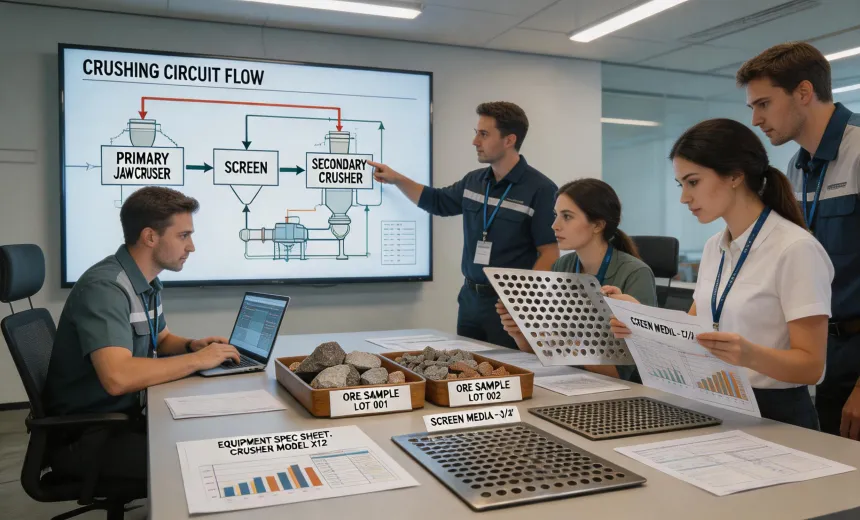
Application support for crushing and screening decisions

Continental services are built for technical buyers who need more than a quotation. We review operating data, document assumptions, and help site teams understand how crushing and screening equipment will behave under real production constraints.

Application engineering review room

Structured support from evaluation to commissioning

01

Ore and feed condition review

Our engineering desk reviews feed top size, fines content, moisture behavior, abrasivity, clay risk, and expected variation across shifts. The output is a documented equipment envelope rather than a generic recommendation.

02

Circuit balance assessment

Crusher capacity, screen area, conveyor transfer points, recirculating load, and surge control are evaluated together so the proposed package does not move a bottleneck from one process step to another.

03

Installation and maintenance planning

Before delivery, Continental documents service access, lifting routes, guarding interfaces, lubrication points, spare modules, and inspection timing to help maintenance teams protect availability.

04

Commissioning evidence file

Startup support focuses on safe verification, operating settings, vibration observation, screen media checks, and training notes that can be retained in the site technical record.

How the review process stays traceable

Each service engagement begins with a defined question: increase throughput, stabilize product size, reduce liner change surprises, improve screen availability, or prepare a greenfield equipment package. Continental keeps those objectives visible through the review, because mining teams often need to explain equipment decisions to operations, finance, maintenance, and safety stakeholders at the same time.

The service model is intentionally evidence-led. We prefer a smaller number of well-documented assumptions over broad promises. When data is incomplete, the proposal identifies the missing inputs and the sensitivity of the recommendation. That helps buyers understand what must be confirmed before procurement, fabrication, or site work begins.

Feed gradation, target product size, moisture range, abrasivity observations, operating hours, current bottlenecks, site power constraints, and maintenance windows are the most useful starting points.

Yes. Existing circuits can be reviewed through operating logs, wear records, screen inspection notes, transfer-point observations, and operator feedback.

Training can be included around inspection routines, safe adjustment practices, documentation handover, and early warning signals that should trigger engineering follow-up.

Before structured review

Equipment selection may rely on headline capacity, disconnected quotations, and assumptions that are not visible to the maintenance or process team. That creates risk when ore conditions change, when screen media blinds, or when liner inspection intervals are not aligned with production planning.

After Continental review

The recommendation links material behavior, circuit balance, maintainability, documentation, and commissioning checks. The result is a clearer technical record that can travel from engineering approval to procurement, site installation, and operational handover.

Start with a focused engineering question

Send the operating condition you need to solve and Continental will define the review path, data requirements, and documents needed for the next decision gate.

Open Service Request